Payment Gateway for Education integrates student registration, online payments, payment verification, e-Receipt issuance, and course access into a single process. It enables educational institutions to provide faster, more secure, and more efficient digital services.
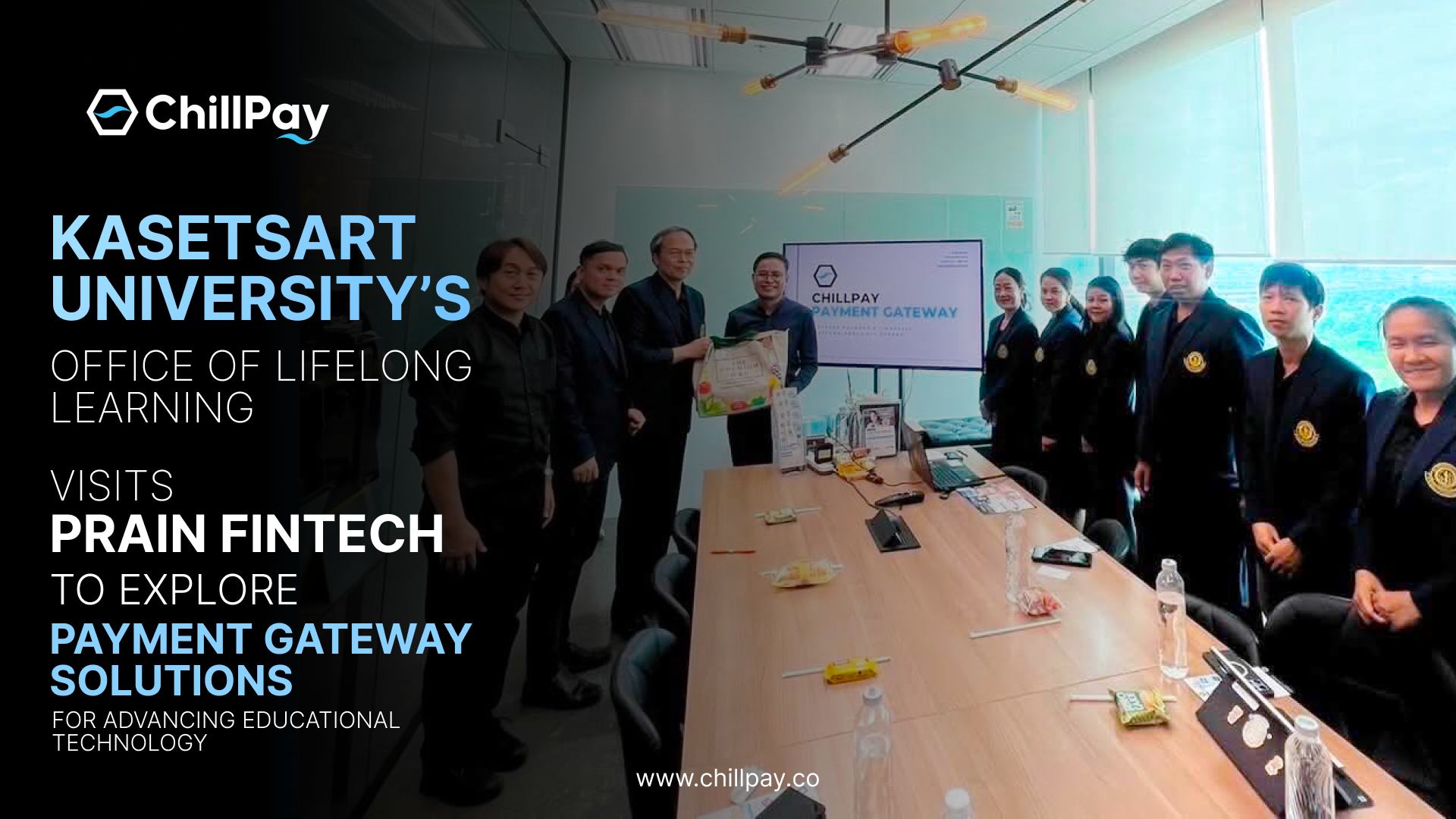
Payment Gateway for Education is a technology that integrates student registration, course fee payments, payment verification, electronic receipt issuance, and online course access into a single process. It enables learners to receive faster services while reducing operational steps and improving the efficiency of educational data management.On 6 July 2026, the Lifelong Learning Development Office of Kasetsart University, led by Dr. Chaiwat Klampol, Deputy Director for Digital Technology, Marketing, and Customer Relations, together with Mr. Wisanu Sanson, Head of Learning Innovation Development, Mr. Wasan Choonwijitra, Head of Learning Promotion, and the Office’s personnel, visited PraIn FinTech Company Limited, an online payment service provider offering Payment Gateway solutions.
The study visit aimed to explore how Financial Technology, or FinTech, could be applied to the development of Educational Technology, or EdTech, infrastructure. The objective was to improve services for learners and staff while enhancing the convenience, speed, and security of future digital systems.
How Can a Payment Gateway Enhance Educational Platforms?
A Payment Gateway for Education connects student registration, payments, payment verification, e-Receipt issuance, and online course access within a single workflow. This enables learners to receive faster services, reduces manual verification tasks, and helps educational institutions manage information more systematically and securely.
Exploring FinTech Applications for EdTech Development
The study visit to PraIn FinTech focused on exchanging knowledge about digital payment systems and approaches to integrating Payment Gateway technology with learning platforms. The discussions covered the entire process, from course registration and payment processing to transaction verification and back-office data management.
The study helped the institution identify practical ways to apply financial technology to educational services. These insights can support the development of platforms that are more convenient, efficient, and secure for both learners and staff.
Objectives of the Study Visit
The Lifelong Learning Development Office of Kasetsart University aimed to explore how financial technology could support the development of online learning platforms. The study focused on three key areas.
1. Integrating a Smart Student Registration System
The study examined how online payment systems could be connected to learning platforms, allowing learners to select courses, register, make payments, and access online learning systems through a continuous process.
When the platform receives real-time payment confirmation, it can automatically verify the transaction and activate course access. This reduces the need to wait for manual payment verification, minimizes communication steps with staff, and provides learners with a smoother user experience.
Connecting learner information, course details, payment records, and enrollment status within a single system can also reduce errors caused by manual verification or data entry.
2. Developing an Automated Management System
Another key objective was to explore how technology could automate the payment verification process. Once a transaction is completed, the system can automatically update the learner’s enrollment status, send notifications, and transfer the relevant data to connected back-office processes.
Electronic receipts, or e-Receipts, can also be linked to learner information, course details, and payment records. This helps reduce document-processing steps, speeds up service delivery, and makes historical information easier to manage and verify.
Automated management systems can also reduce administrative workloads, allowing personnel to dedicate more time to curriculum development, learner support, and service improvement.
3. Strengthening Cybersecurity
Educational platforms connected to payment systems must properly protect personal data, enrollment information, and transaction records. Studying digital financial security standards is therefore an important part of designing secure and reliable technology infrastructure.
System development should take Thailand’s Personal Data Protection Act, or PDPA, into account. This includes data collection, purpose notification, access control, data storage, and the lawful use or disclosure of personal information.
Educational institutions should also consider identity verification, data encryption, activity logging, staff access permissions, and cybersecurity incident response planning.
Benefits of a Payment Gateway for Education
| Development Area | Application | Benefits |
|---|---|---|
| Student Registration | Connects course registration with online payment | Reduces registration steps and improves convenience for learners |
| Payment Verification | Receives and updates transaction status in real time | Reduces manual payment evidence verification |
| Course Access | Connects payment status with the online learning platform | Allows learners to access courses more quickly |
| Electronic Receipts | Connects transaction data with the e-Receipt system | Reduces document preparation and storage processes |
| Administration | Centralizes learner, course, and payment information | Improves data verification and reporting |
| Security | Applies access controls and data protection measures | Reduces risks involving personal and transaction data |
Payment Gateway and the Learner Experience
The learner experience begins with searching for a course, creating an account, registering, and making a payment. When these steps are disconnected or time-consuming, learners may experience difficulties before the learning process even begins.
A Payment Gateway integrated with an EdTech platform can help eliminate these barriers. After a successful payment, the system can notify the learner, update the enrollment status, and provide course access according to the specified conditions.
From an administrative perspective, institutions can also view information such as enrollment numbers, payment status, popular courses, and transactions requiring further verification. This information can be used to improve services and guide future platform development.
Integrating FinTech and EdTech for Lifelong Learning
The study visit to PraIn FinTech reflects an approach to applying knowledge from the FinTech industry to support EdTech development, particularly in back-office systems involving registration, payment processing, document issuance, and learner data management.
When financial systems and learning platforms work together effectively, educational institutions can provide more flexible services, support larger numbers of learners, and reduce processes that would otherwise require manual work.
This approach also supports lifelong learning, including short courses, professional training, upskilling programs, and online education for learners of different ages. User-friendly, efficient, and secure digital systems are therefore essential infrastructure for future educational services.
Conclusion
A Payment Gateway for Education does more than process course payments. It can support the entire learner service process, including registration, payment verification, course access activation, e-Receipt issuance, and back-office data management.
The study visit by the Lifelong Learning Development Office of Kasetsart University to PraIn FinTech provided an opportunity for knowledge exchange between the education and FinTech sectors. It explored how technology could be applied to learning platforms, administrative management, and digital system security.
Effective system integration can improve convenience for learners, reduce administrative workloads, and support more efficient lifelong learning services in the future.